Introduction
For years, women have been told to follow the same diet and workout routine every single day — regardless of hormones, energy levels, or cycle phases.
But your body isn’t static. It changes weekly.
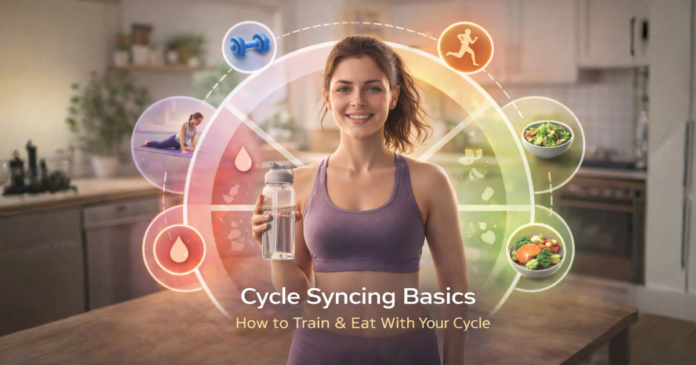
Cycle syncing is the practice of adjusting your training, nutrition, and self-care based on the four phases of your menstrual cycle. When done correctly, it can help you:
- Improve energy and performance
- Reduce PMS symptoms
- Support hormone balance
- Avoid burnout and overtraining
- Feel more in tune with your body
This guide breaks down cycle syncing simply and realistically, without extremes or complicated rules.
What Is Cycle Syncing?
Cycle syncing means aligning your lifestyle with the four phases of your menstrual cycle:
- Menstrual Phase
- Follicular Phase
- Ovulatory Phase
- Luteal Phase
Each phase comes with different hormone levels, which affect:
- Energy
- Strength
- Appetite
- Mood
- Recovery
Ignoring this often leads to frustration. Working with it creates consistency.
The 4 Phases of Your Cycle (Simplified)
1️⃣ Menstrual Phase (Days 1–5)
What’s happening hormonally:
Estrogen and progesterone are at their lowest.
How you may feel:
- Low energy
- Need for rest
- More inward and reflective
Training Recommendations
- Gentle movement only
- Walking
- Stretching
- Yoga or mobility
- Optional complete rest
Avoid: HIIT, heavy lifting, intense cardio
Nutrition Focus
- Iron-rich foods (leafy greens, lentils, red meat if you eat it)
- Warm meals (soups, stews)
- Plenty of fluids
2️⃣ Follicular Phase (Days 6–13)
What’s happening hormonally:
Estrogen begins to rise.
How you may feel:
- Motivated
- Clear-headed
- More social
- Faster recovery
Training Recommendations
- Strength training
- Trying new workouts
- Moderate cardio
- Skill-based exercises
This is the best phase to build habits.
Nutrition Focus
- Lean protein
- Complex carbs
- Fresh vegetables
- Lighter meals
3️⃣ Ovulatory Phase (Days 14–17)
What’s happening hormonally:
Estrogen peaks. Testosterone slightly rises.
How you may feel:
- Strong
- Confident
- High energy
- Social and expressive
Training Recommendations
- HIIT
- Heavy lifting
- Intense workouts
- PR attempts
This is your performance window.
Nutrition Focus
- Balanced meals
- Adequate protein
- Fiber-rich foods
- Hydration
4️⃣ Luteal Phase (Days 18–28)
What’s happening hormonally:
Progesterone rises, then both hormones drop before menstruation.
How you may feel:
- Slower energy
- Increased appetite
- Need for structure
- More sensitive to stress
Training Recommendations
- Lower intensity strength
- Pilates
- Walking
- Short workouts
Avoid: pushing through fatigue
Nutrition Focus
- More calories if needed
- Magnesium-rich foods (nuts, seeds, dark chocolate)
- Stable meals to reduce cravings
Common Cycle Syncing Mistakes 🚫
❌ Trying to train the same intensity every day
→ Leads to burnout and hormonal stress.
❌ Using cycle syncing as an excuse to quit movement
→ It’s about adjusting, not stopping.
❌ Ignoring hunger during the luteal phase
→ Often causes binge cycles.
❌ Overcomplicating it
→ Cycle syncing should feel supportive, not stressful.
Pro Tips for Real-Life Cycle Syncing 💡
- You don’t need to be perfect — awareness is enough
- Track your cycle for at least 2–3 months
- Adjust intensity, not consistency
- Eat slightly more during luteal phase without guilt
- Sleep becomes more important than workouts late in the cycle
Mini Checklist: Cycle Syncing Made Simple ✅
✔ Know what phase you’re in
✔ Match workout intensity to energy
✔ Eat more during luteal phase if needed
✔ Prioritize recovery before your period
✔ Stop fighting your body
Does Cycle Syncing Actually Work?
Research shows that hormonal fluctuations affect:
- Strength output
- Recovery speed
- Insulin sensitivity
- Stress tolerance
Women who respect these changes often report:
- Fewer PMS symptoms
- Better workout consistency
- Improved relationship with food
Cycle syncing isn’t a trend — it’s body literacy.
People Also Ask (PAA)
Can beginners use cycle syncing?
Yes. In fact, beginners benefit the most because it prevents burnout early.
Do I need to stop training during my period?
No. Light movement is often beneficial — listen to your body.
What if my cycle is irregular?
Use energy and symptoms as your guide instead of calendar days.
Is cycle syncing backed by science?
Hormonal patterns are well-documented. Cycle syncing applies them practically.
Important Disclaimer ⚠️
Cycle syncing is not medical advice.
If you have conditions such as PCOS, endometriosis, or are on hormonal medication, consult a healthcare professional before making major changes.
Conclusion
Your body isn’t broken — it’s cyclical.
Cycle syncing helps you:
- Stop fighting your hormones
- Train smarter, not harder
- Eat with awareness, not restriction
- Build consistency that lasts
You don’t need extreme plans.
You need alignment.
CTA
💌 If this helped you understand your body better, share this article with another woman who feels disconnected from her cycle.