Introduction
If you’ve ever done everything right — eating clean, exercising consistently, staying disciplined — and still felt like your body was fighting you…
it might not be lack of willpower.
It might be your hormones.
For women, weight loss is not just about calories and workouts.
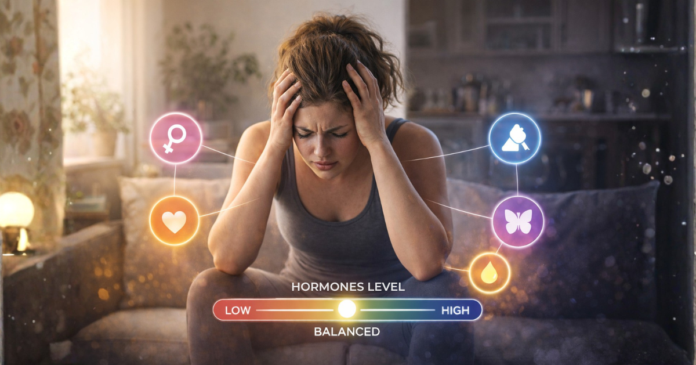
It’s deeply connected to hormonal balance — and when hormones are off, progress feels slow, frustrating, or impossible.
This article will help you understand:
- which hormones affect fat loss
- why women struggle more than men
- and what realistic, safe steps you can take to support hormonal balance
The 5 Hormones That Most Affect Women’s Weight Loss
1. Insulin – The Fat Storage Hormone
Insulin controls how your body uses sugar (glucose).
When insulin levels are constantly high:
- your body stores more fat
- especially around the belly
- cravings increase
- energy crashes become common
What raises insulin too often:
- frequent snacking
- high sugar intake
- refined carbs
- stress + poor sleep
What helps:
- balanced meals (protein + fiber)
- spacing meals properly
- reducing sugar spikes
2. Cortisol – The Stress Hormone
Chronic stress = high cortisol.
High cortisol:
- tells the body to store fat
- increases belly fat
- increases cravings for sugar and salty foods
- disrupts sleep
Many women train harder when stressed — which often makes cortisol worse.
What helps lower cortisol naturally:
- walking
- deep breathing
- proper rest days
- consistent sleep schedule
3. Estrogen – The Female Balance Hormone
Estrogen affects:
- where fat is stored
- how your metabolism works
- water retention
- mood and motivation
When estrogen fluctuates (PMS, cycle phases, perimenopause):
- weight loss slows
- bloating increases
- motivation drops
This is normal, not failure.
Understanding your cycle helps you work with your body instead of against it.
4. Leptin – The Satiety Hormone
Leptin tells your brain: “I’m full.”
When leptin sensitivity is low:
- you don’t feel satisfied after meals
- hunger returns quickly
- overeating feels uncontrollable
Causes of leptin resistance:
- chronic dieting
- extreme calorie restriction
- lack of sleep
Yes — undereating can slow weight loss.
5. Thyroid Hormones – Metabolism Regulators
Your thyroid controls:
- metabolic rate
- energy levels
- temperature regulation
Symptoms of imbalance may include:
- fatigue
- cold sensitivity
- stubborn weight
- hair thinning
This does not mean you have a condition — but it means metabolism needs support, not punishment.
Why “Just Eat Less” Doesn’t Work for Women
Extreme dieting:
- increases cortisol
- worsens insulin sensitivity
- disrupts estrogen balance
- slows metabolism
That’s why many women:
- lose weight fast at first
- then plateau
- then regain it
Weight loss should support hormones — not fight them.
Practical Ways to Support Hormonal Balance (Safely)
✔ Eat enough protein
Helps insulin, leptin, and muscle preservation.
✔ Don’t train hard every single day
Recovery matters more for women.
✔ Prioritize sleep
Even one week of poor sleep increases insulin resistance.
✔ Manage stress before trying to “fix” food
Stress blocks fat loss more than carbs ever will.
✔ Be patient with your cycle
Your body changes throughout the month — that’s biology, not weakness.
Common Mistakes Women Make (Hormone-Wise)
❌ Training intensely while exhausted
❌ Cutting calories too low
❌ Ignoring sleep and recovery
❌ Comparing results to men
❌ Blaming themselves instead of biology
PAA – People Also Ask
Does hormonal imbalance make it impossible to lose weight?
No — but it can slow progress. Supporting hormones makes weight loss sustainable.
Can stress really stop fat loss?
Yes. Chronic stress increases cortisol, which promotes fat storage.
Should women train differently than men?
Yes. Women recover differently and respond better to balanced routines.
Can diet alone fix hormones?
Diet helps, but sleep, stress, and recovery are equally important.
Important Safety Note – When Not to Ignore Symptoms
If you experience:
- extreme fatigue
- missed periods
- sudden weight gain
- hair loss
- severe PMS or cycle changes
👉 consult a healthcare professional.
Lifestyle changes help, but medical guidance matters.
Conclusion
Your body is not broken.
Your hormones are not your enemy.
When you understand how they work — and support them gently — weight loss becomes calmer, steadier, and far more sustainable.
Fat loss for women is not about control.
It’s about balance.
CTA
👉 Want a program designed with female hormones in mind?
Join the 21-Day FFB Challenge and learn how to train, eat, and recover in a way that supports your body.
📢 Share this article — many women blame themselves for something that isn’t their fault.